A tropical garden
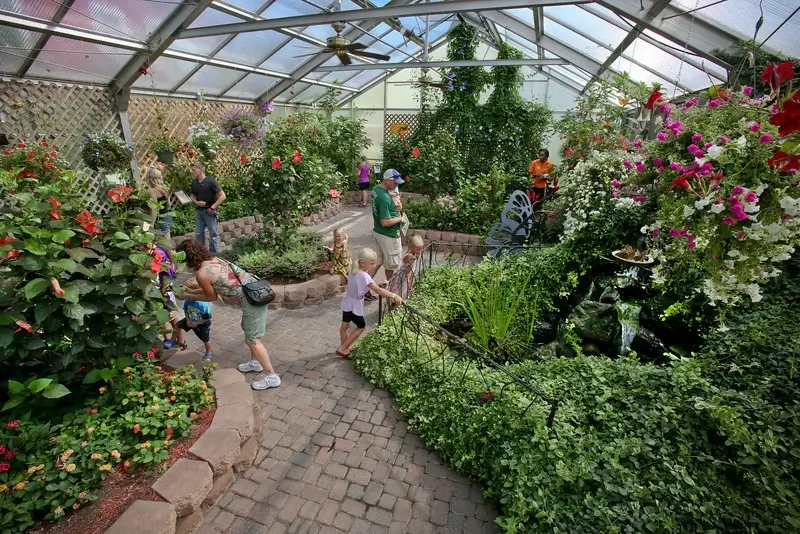
About 1,800 sq. ft. of tropical garden, planted for close looking.
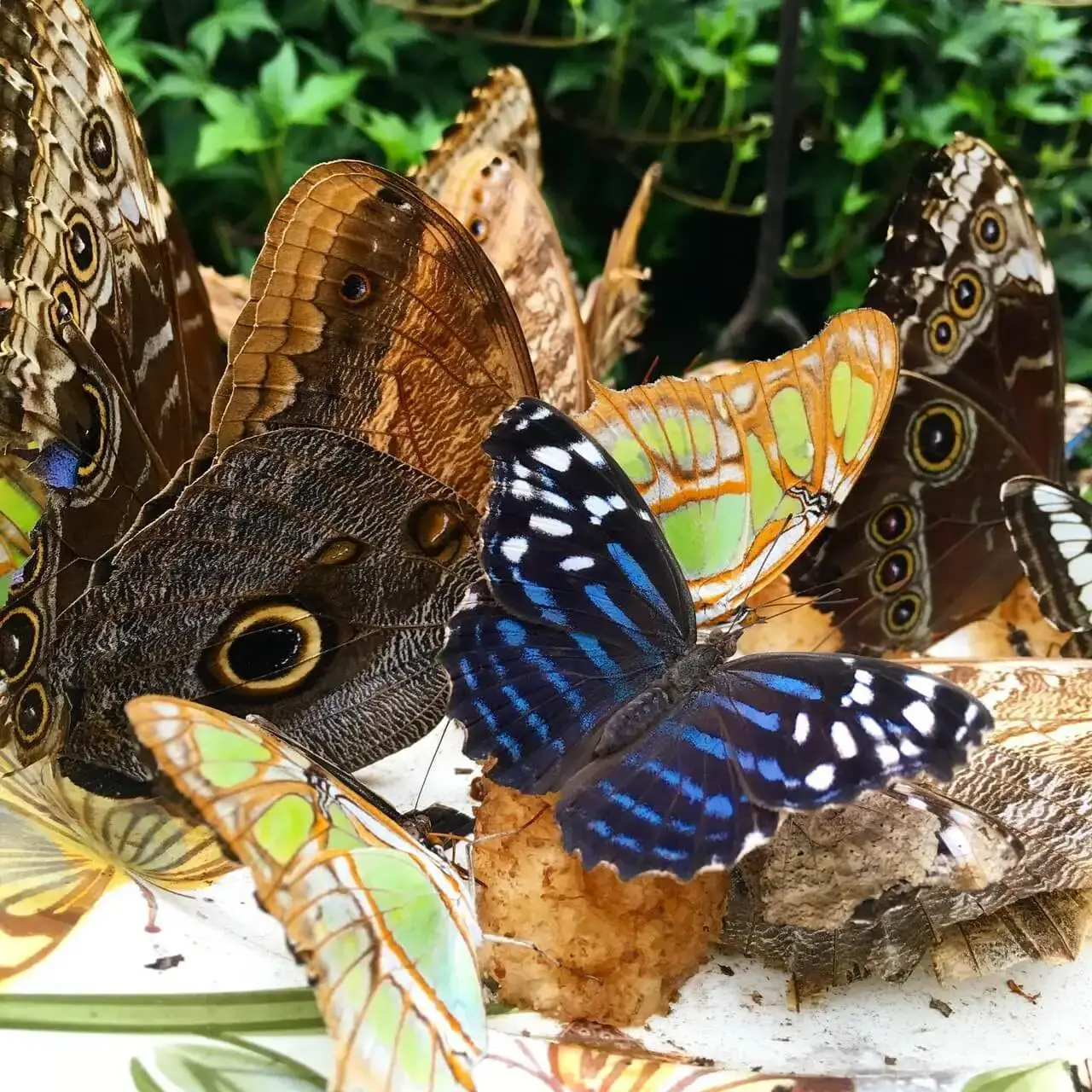
An approximately 1,800 sq. ft. tropical garden, hundreds of free-flying butterflies, feeding stations and signs that reward a slower look.
Butterflies gathering at a feeding station.
Under the glass roof
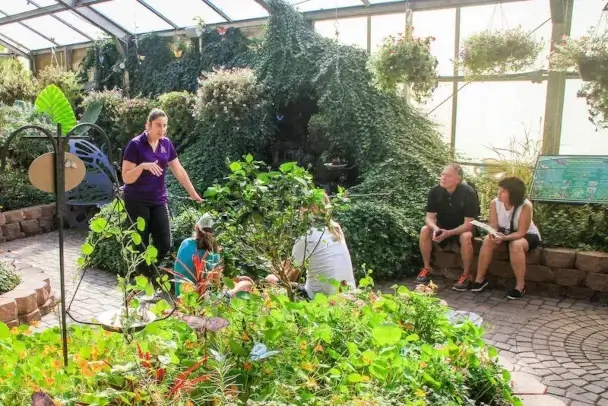
The garden is where everything meets: the butterflies, the plants they feed on, the signs that explain them and the people who look after all of it. Slow down at the feeding stations, then match what you see against the Butterfly I.D. Chart.
About 1,800 sq. ft. of tropical garden, planted for close looking.
Hundreds of live butterflies fly free through the garden around you.
Feeding stations give a visitor a reason to pause and notice behavior rather than only passing through.
A Butterfly I.D. Chart and educational signs help you put names to what you see.
Wing patterns, feeding behavior and the smaller residents of Insect World all reward a longer pause. The garden’s Butterfly I.D. Chart puts names to what you see.
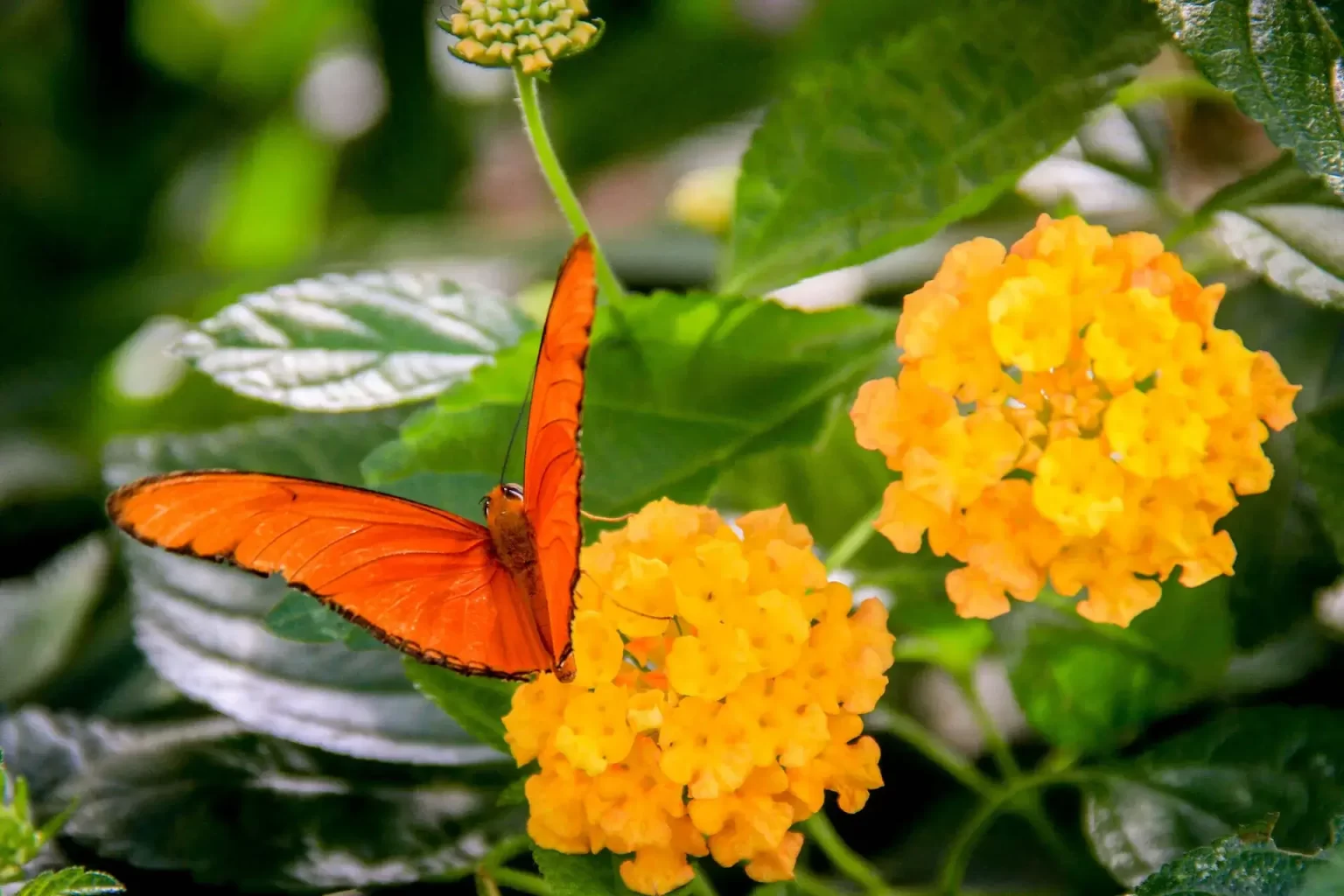
Open wings over orange blooms, the kind of detail that appears when you stop walking and let the garden come to you.
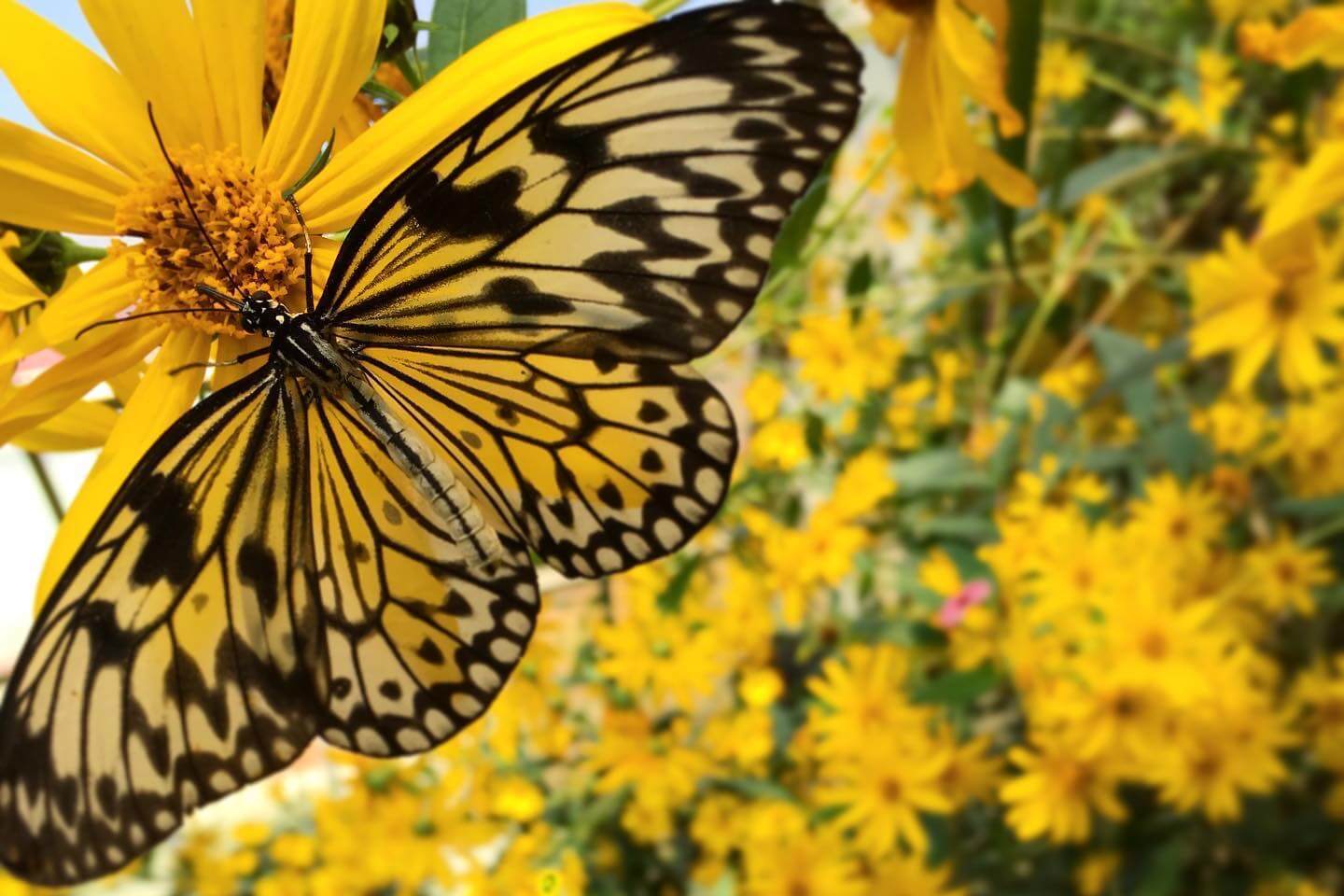
Veins, edges and markings differ from wing to wing, which is exactly what the identification chart is for.
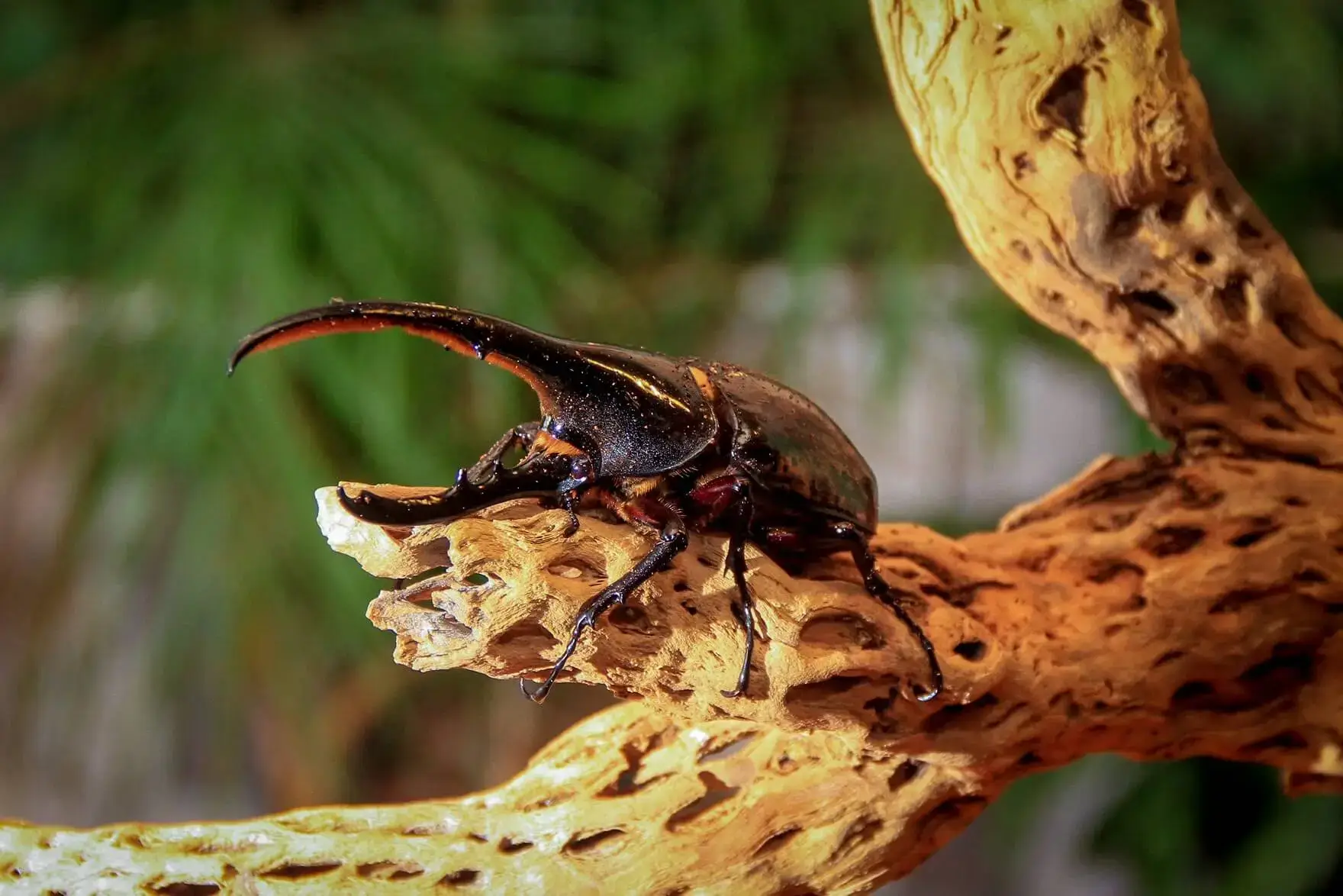
Insect World’s residents reward the same close attention from a completely different angle of the visit.
Which butterflies are flying changes with each delivery. The way to see them doesn’t: arrive, observe, ask, and connect what you see to the journey behind it.
Enter with the visitor rules in mind: look without touching butterflies or flowers, and let the space do its work.
Look for the places where the garden makes butterfly behavior easier to notice.
Move from garden observation to the emergence and conservation story behind the attraction.
See it in person
Buy admission on the official store, then check this season’s hours before you head to the island.