01
Pupae arrive.
Start with the part of the story visitors do not usually see: butterflies arrive as chrysalises.
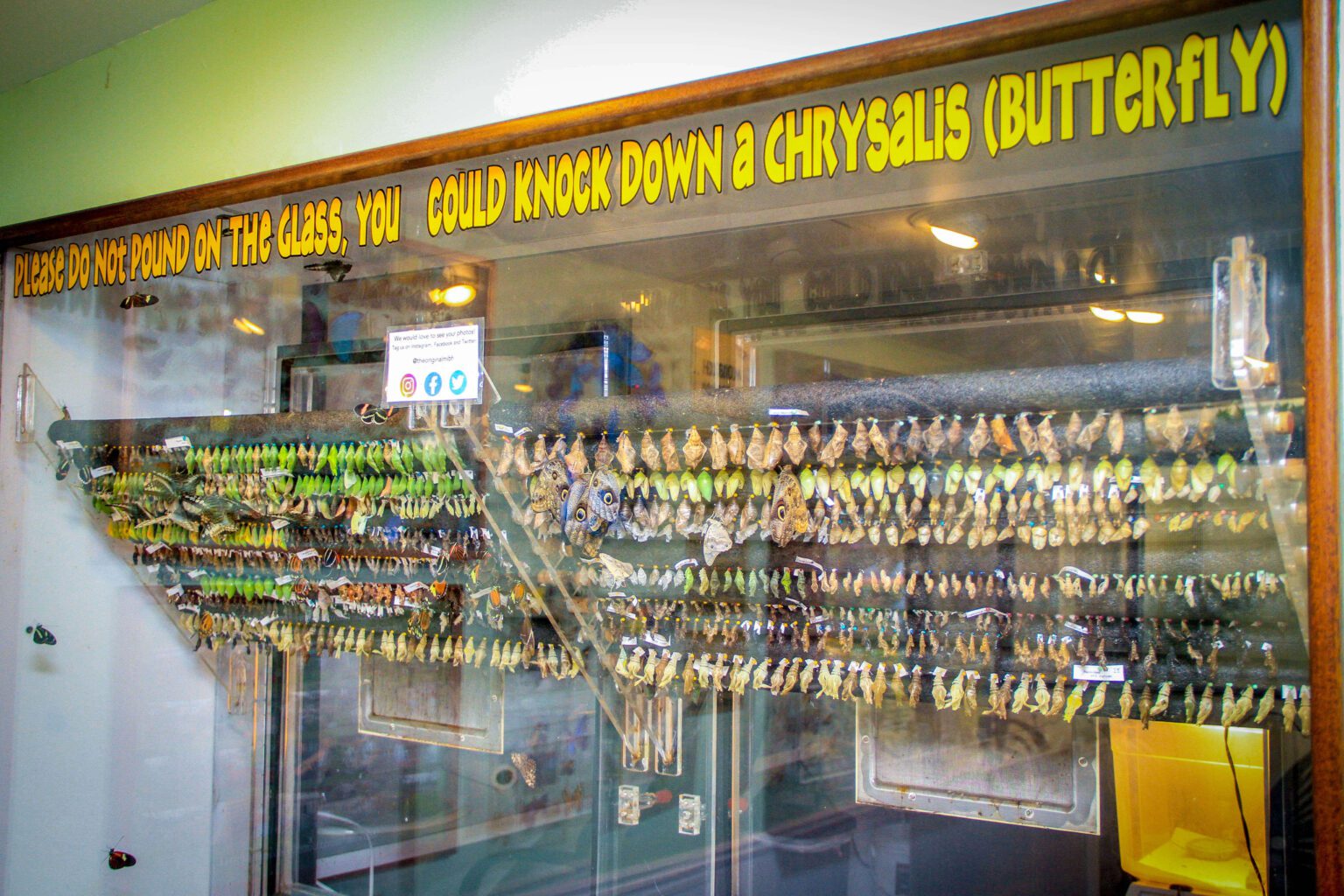
Pupae arrive, an emergence chamber makes the change visible, and the garden becomes the place where visitors can keep learning through observation.
The emergence window.
The garden’s butterflies arrive as chrysalises from conservation suppliers, then emerge and are released into the garden. These three steps are a clear way to carry that story into a visit.
Start with the part of the story visitors do not usually see: butterflies arrive as chrysalises.
In the emergence chamber, a change that usually happens out of sight becomes something you can watch.
Release connects the process to the tropical garden, where identification and observation continue.
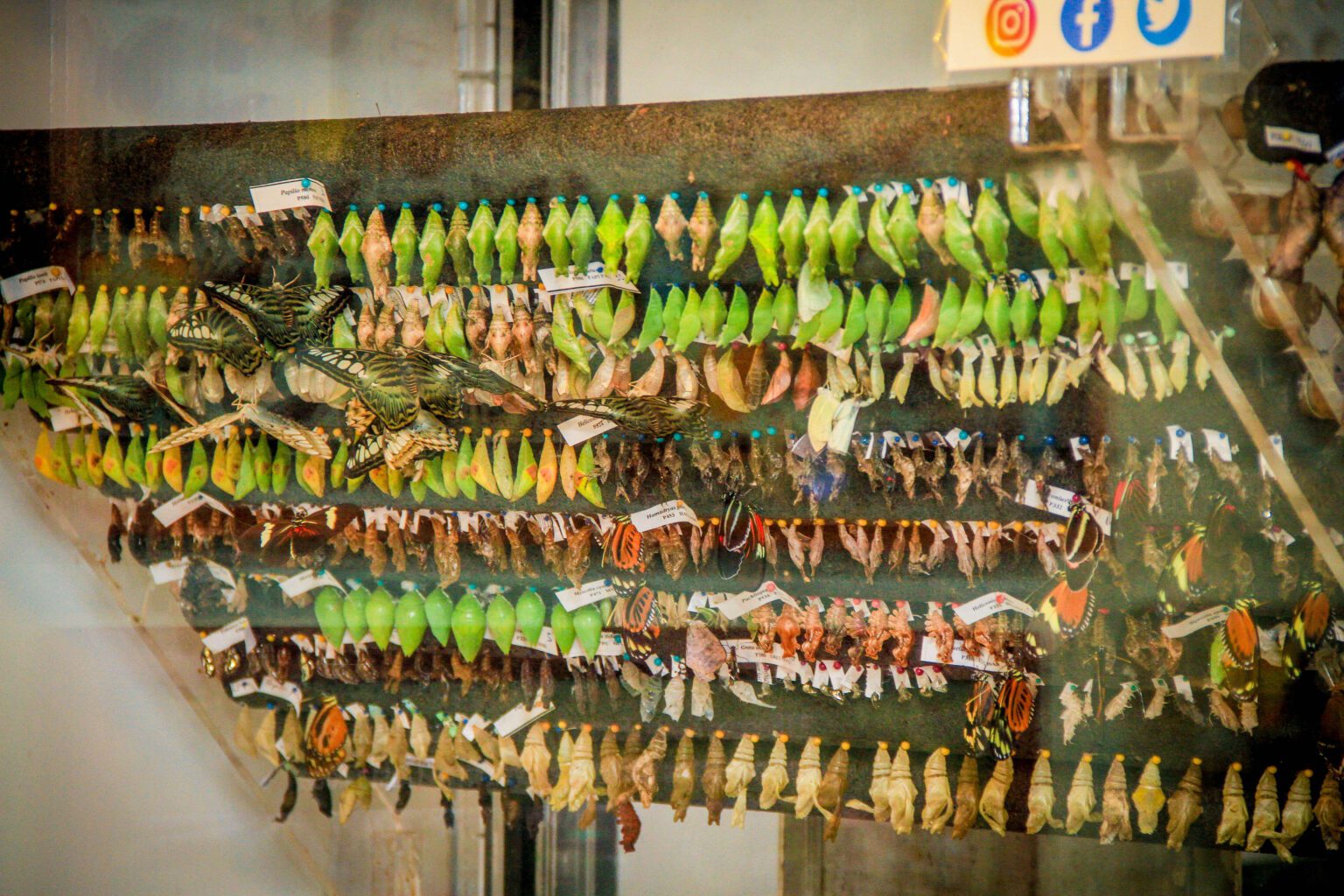
The change, happening behind glass.
Chrysalises in the emergence window
For a family, class or group, the useful question is not “How many things can we name?” It is “What changed, and how can we tell?”
Educational signs and a Butterfly I.D. Chart help you put names to what you see in the garden.
Use the emergence story to give a release, feeding station or encounter a little more context.
The suppliers and conservation page explains where the butterflies come from and why it matters.
Groups and tours have an official registration route; the team confirms terms and availability.
Keep the story close
The official journey and conservation pages carry the full text, images and current context.